Progressive Overload: The One Rule That Actually Builds Muscle
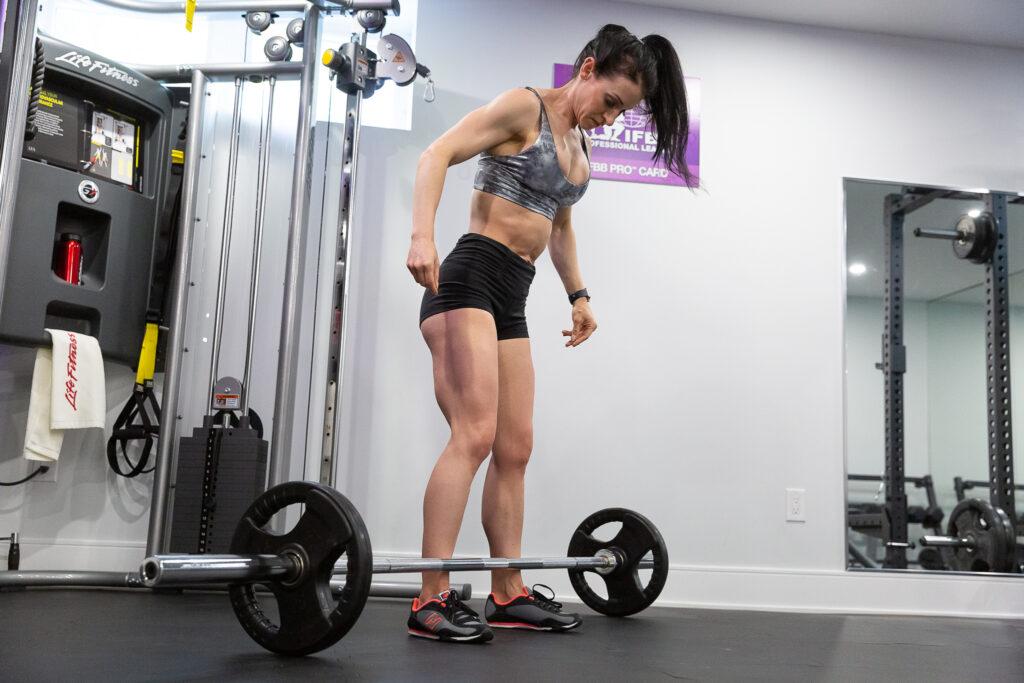
If you have been doing the same workout for six months and wondering why your body stopped changing, this is the answer. Not your metabolism. Not your age. Not a hormone you read about on Instagram. Your training stopped getting harder, so your body stopped needing to adapt.
What progressive overload actually means
Muscle is expensive for your body to build and maintain. It will only make more of it if you give it a reason. That reason is a demand it cannot comfortably meet with what it already has. Progressive overload is the practice of steadily increasing that demand.
Most women hear this and think it means adding weight every session. That is one way, and it is not the only way, and it is not even the most useful way once you are past the first few months.
Six ways to progress that are not just heavier
- Load. More weight on the bar for the same reps.
- Reps. Same weight, one or two more reps than last time.
- Sets. Three working sets instead of two.
- Range of motion. A deeper squat at the same weight is harder work.
- Tempo. A three-second lowering phase changes a set completely.
- Rest. Same work in less time is more demanding.
You do not need all six. You need one of them to move in the right direction over a span of weeks.
The mistake that stalls most women
Two of them, actually. The first is not tracking anything, so you have no idea whether last Tuesday was harder than the Tuesday before. If you are not writing it down, you are guessing. A simple training journal fixes this in about two minutes per session.
The second is changing the exercises every week. Variety feels productive. It is the enemy of measurable progress. You cannot tell whether you are getting stronger at a movement you only do once a month. Pick your main lifts and keep them for at least eight to twelve weeks.
What realistic progression looks like
Not linear. Not every session. If you are new to lifting, you might add weight weekly for a while. After a year, adding five pounds to a lift every month or two is a good year. That is normal, and it still compounds into a different body.
A useful benchmark: over eight weeks, every main lift should have moved in at least one of the six directions above. If nothing moved, the program is not the problem. The tracking is.
How this fits into fat loss
This is the part that matters for body recomposition. In a calorie deficit, your body looks for tissue to give up. Progressive overload is the signal that tells it to keep the muscle and use the fat instead. Without that signal, you lose both and end up smaller but softer.
Where to start this week
Write down what you lifted. Next session, beat one number. That is the whole method. If you want it structured for you, the customized workout programs are built around progression rather than variety, and one-on-one virtual sessions cover the technique side so the added load lands where it should.
A worked example
Say your goblet squat is 40 pounds for three sets of ten. Week two you get 40 for 3×11. Week three, 40 for 3×12. Week four you move to 45 pounds and drop back to 3×9. Week five, 45 for 3×10. That is progressive overload. It looks unimpressive week to week and it is a different lift eight weeks later.
Notice that the weight only moved once in five weeks. The reps did the work in between. This is why women who only chase heavier weight stall so often: they run out of jumps and conclude they have plateaued, when they have simply been using one of six available levers.
When you genuinely cannot progress
Sometimes the numbers stop and it is not a programming problem. The usual suspects, in order of how often they turn out to be the cause:
- Not eating enough. Especially protein. You cannot build tissue you have not supplied materials for.
- Not sleeping enough. Adaptation happens during recovery, not during the session.
- Too much volume. More sets is not always more progress. Sometimes you are accumulating fatigue faster than you recover from it.
- Too much life stress. Your body does not distinguish between training stress and a brutal quarter at work. It is all one recovery budget.
If you have been stuck for more than three or four weeks and none of the six levers will move, the answer is usually a deload week rather than more effort. Drop your volume by roughly half for seven days, keep the intensity, and come back. Most stalls resolve themselves.
Why this matters more for women than most coaches admit
Women are routinely handed programs built around high reps, light weights and constant variety, on the theory that this produces tone without size. It produces neither, because it has no mechanism for progression built into it. The same three-pound dumbbells for twenty reps, forever, is not a stimulus. It is a warm-up you have been sold as a workout.